Navigating Surgery with Type 1 Diabetes
My Small-Town Hospital Experience
What happens when you go under the knife and your hospital doesn’t quite get Type 1?
In my last post, I shared the story of my neck surgery—how a herniated disc at C5-C6 turned my life upside down, and the agonizing seven-week wait to get an artificial disc replacement. At the end of that post, I promised to share what it was actually like to go through surgery as a Type 1 diabetic, especially in a small-town hospital where T1D isn’t something healthcare providers see every day.
While the surgery itself was a massive success, the hospital experience was an adventure in diabetic advocacy.
“We Deal with Diabetics All the Time”
When you are a Type 1 diabetic, you are the pilot of your own medical spacecraft. You manage it 24/7. You become borderline obsessive because you have to be. T1D is a constant, exhausting tightrope walk between a quick death from low blood sugar and a slow death from high blood sugar. Either way, it’s a constant battle.
So, forgive me for being a little curious about how they planned to keep me alive while I was unconscious.
When I asked my hometown neurosurgeon how his team handled Type 1 diabetics during a major procedure, his response was a shrugged shoulder and a dismissive: “We deal with diabetics all the time.”
That’s great for them. But I don’t deal with having neck surgery all the time.
I naively assumed that in this modern era of Bluetooth, continuous glucose monitors (CGMs), and smart insulin pumps, they’d simply pull my real-time glucose data up on a big screen in the operating room. It seemed like a no-brainer! If my sugar crashed, they could act; if it spiked, they could give me insulin.
But when I asked if they’d be looking at my CGM, the answer was a flat, unexplained “no.”
The Pre-Surgery Runaround
Because I live in a smaller town, my endocrinologist is a full hour’s drive away in a neighboring city. When I asked them how the hospital would handle my diabetes during surgery, they shrugged and said, “Well, your surgeon should be able to give you an answer on that.”
How did they “handle it?” A week before surgery, my local diabetes support program printed out a massive stack of my trend reports and pump settings. I understood why they wanted my daily basal doses and carb ratios, but looking at a piece of paper showing what my blood sugar did last Tuesday wasn’t going to keep me from crashing in real time while under anesthesia.
The surgeon did make two concessions because of my diabetes:
1. He scheduled me as the first patient of the day. Diabetics have a higher risk of complications, so they want us done first. (This is actually why my first surgery date got bumped—an emergency pushed my slot back, and because I couldn’t be first, they rescheduled me a week later).
2. He insisted I stay overnight in the ICU. Usually, disc replacements go to a standard recovery room for one night, but he wanted me in the ICU for extra caution. I appreciated the safety net, but I was not prepared for where in the ICU I would end up.
The Pre-Op Waiting Game
Bright and early on the morning of the surgery, they pricked my finger in pre-op. Then I sat in the holding bay for an hour, watching the clock tick down without my phone. My
phone is my comfort blanket; it keeps track of my diabetes management and quite literally keeps me alive.
As they got ready to wheel me into the operating room, I started getting anxious. “Can someone please just check my sugar one more time?” I asked. They did, and thankfully, it was good. I went under prayerfully hoping they would keep a close eye on me.
To my knowledge, they didn’t check it again until I woke up in post-op. My very first request when I woke up was: “What’s my blood sugar?” It was still stable, thank goodness. But my husband had my phone, and it took an agonizing hour to track him down so I could get it back.
Smelling Like Pee in the ICU
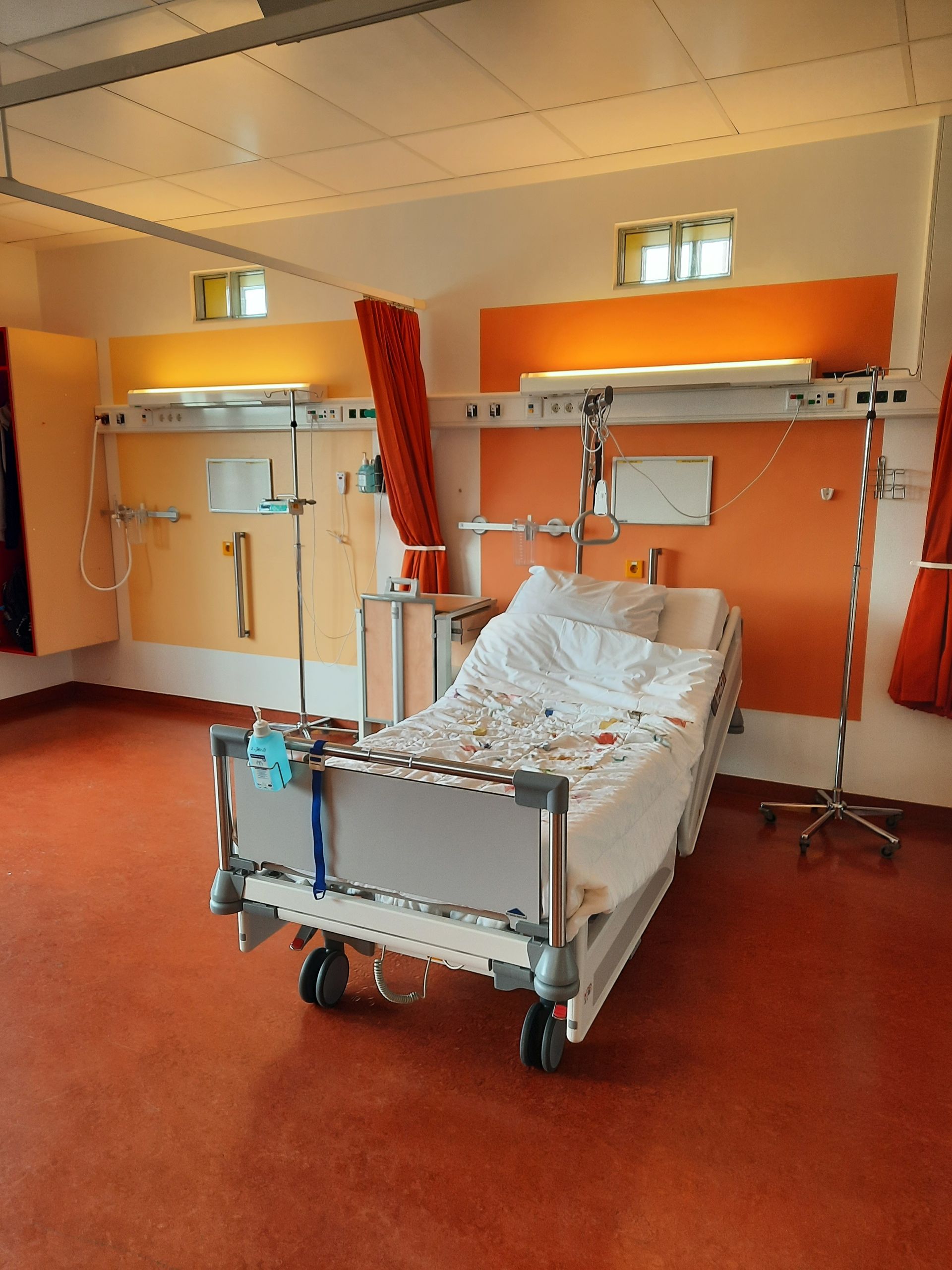
Once they transferred me to my ICU room, things got weird.
The moment I rolled in, I noticed it: everything smelled like pee. The bed, the sheets, the pillows, the blankets. It was disgusting. There was also no shower in the room.
I soon discovered that this specific wing of the ICU was reserved for morbidly obese patients who physically couldn’t leave their beds to use the restroom.
How does a Type 1 diabetic end up here? Because of a lack of medical education. Someone in administration saw “diabetic” on my chart, assumed Type 2, assumed morbid obesity, and booked me into the only bariatric room available. I’m a Type 1 diabetic. It is an autoimmune disease. I decided to just roll with it because it was only for one night, but the smell was hard to stomach.
However, the lack of T1D awareness didn’t stop at the room assignment. Because I was flagged as diabetic, I was handed a specialized “diabetic diet” menu. Let me tell you, it
was the blandest, plainest, most tasteless cardboard. No flavor, no carbs, no joy.
I wanted to scream, “Yo! I didn’t get this disease because I don’t know how to eat healthy!” As a Type 1, I can eat carbs. I just have to dose insulin for them. But the hospital diet was built entirely around Type 2 management.
My nurses were fantastic, but admitted they knew absolutely nothing about my insulin pump or CGM attachments. That was fine; it’s not their specialty, and I was happy to manage it myself. So, I signed a waiver releasing the hospital of liability so I could control my own pump.
Not even an hour after signing that waiver, both my pump and CGM died.
The Perfect Storm
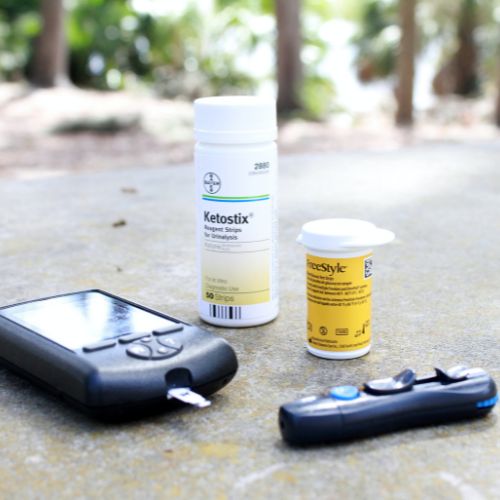
I knew my Dexcom transmitter was at the end of its life, but the timing could not have been worse. When you change a Dexcom transmitter, the system has a mandatory two-hour warm-up period where you get absolutely zero glucose readings.
I changed my pump site, put in a new sensor, clicked in the new transmitter, and sat back to wait out the two hours. Except, it didn’t work. My only transmitter failed. I did not have a backup.
I asked if the hospital pharmacy could just fill a prescription for a replacement transmitter or even a G7 sensor. The hospital doctor came in, looked at me, and said, “Since I’m not your regular endocrinologist, I can’t prescribe that. Our pharmacy can’t help you.”
I was stuck. No CGM. No real-time data. Post-surgery, when my body was under immense physical stress and my blood sugar was bound to go haywire, I was totally in the dark. I was going to have to prick my finger every single hour, all through the night.
Thankfully, Type 1 diabetics have an incredible community. I texted a local friend, and she graciously drove to the hospital to drop off a spare CGM transmitter. She was an absolute lifesaver.
Doing My ICU Laps
With my blood sugar spiking from the stress of the surgery, I knew I needed to move.
I called my nurse and said, “Hey, can I go for a walk?”
She looked at me like I had three heads. “A walk?”
“Well, yeah. The surgery was on my neck, not my legs. I need to bring my blood sugar down.”
She reluctantly agreed, but as we did laps around the ward, she admitted that this wing was built for patients who couldn’t get out of bed; they had never actually seen a
patient get up and walk for exercise.
Better Education is the Prescription
In the end, my neck surgery was a complete success. The shooting nerve pain in my left arm is gone, the numbness has resolved, and I am 95% back to normal. I am so incredibly grateful to my surgeon for his technical skill.
But my hospital stay left me with a burning realization: our medical system needs to do better when it comes to Type 1 diabetes. I don’t expect every nurse and general physician to be an expert in advanced diabetes technology. But when a patient tells you they are a Type 1 diabetic, “We’ll just put you in the ICU” is not a management plan. Dismissing our questions with “we deal with diabetics all the time” ignores the complex, terrifying reality of living with this disease.
If you are a T1D facing surgery, please hear me:
- Be your own loudest advocate
- Keep your phone close, have backup supplies
- Don’t be afraid to demand what you need
We are the ones keeping ourselves alive even when we are in the hospital.